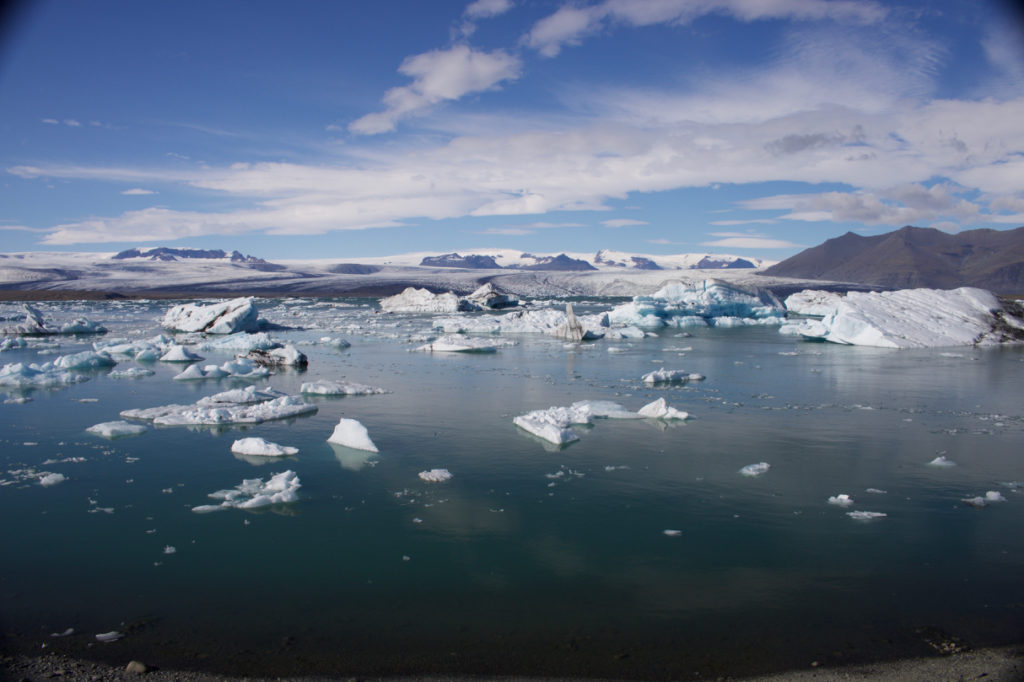
We continued heading north along the east coast, skirting the Vatnajökull glacier. This glacier is one of the two or three largest glaciers in Europe (where it ranks depends on how you define largest – area or volume, and how you define Europe). The glacier is up to a kilometre thick in spots and has many points where the ice flows down the values to form rivers.
Here is the “lagoon” at one of the outlet points. These icebergs are fairly small – the largest in this picture are about the size of a house.
We spent the night in Hofn being rocked to sleep by the howling wind. One of the dangers they warn tourists about is having the local winds catch your car door as you open it and apply enough torque to completely ruin the hinge and door. So we got used to reminding each other to hold the door.
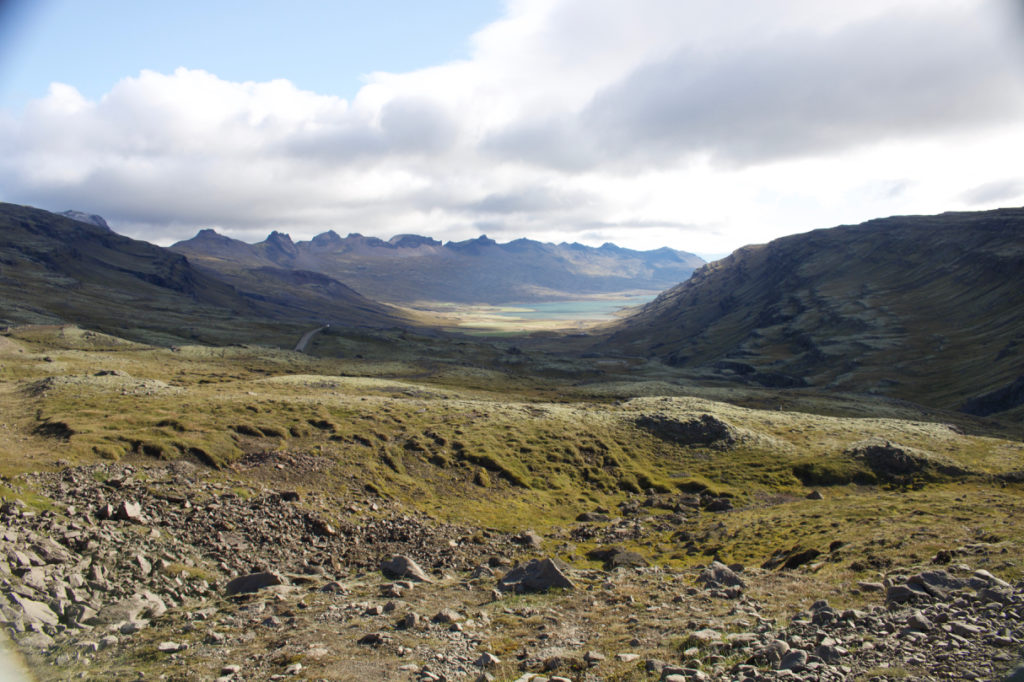
From Hofn, we headed north east initially along the coast to the fishing village of Djúpivogur then across country to Reykjahlíð. Djúpivogur strengthened our long held belief that we just don’t do cities to also include towns or villages. I know some people love touring them but not our thing. However, here is a shot from our trek across country.
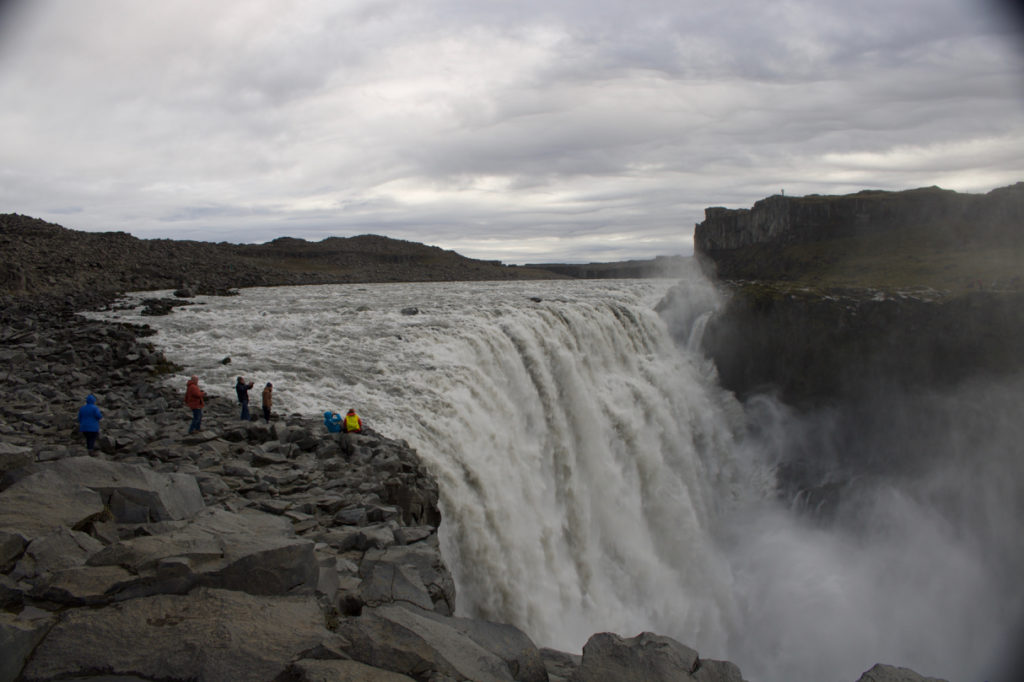
Along the way we saw a sign for the Dettifoss and made a hurried turn on to the 30k diversion to the most powerful falls in Europe. I’m not sure what was worse – driving 30k of washboard road bad enough to make a BC logging road proud, knowing we had to do it again, or looking across the river at the very modern observation deck and tour busses on the other side. There are roads in to each side of Dettifoss and I guess we got the wrong one. In our defense, I think our side had the better view.
From there to Reykjahlíð was an uneventful but enjoyable drive. We arrived a bit late in the day and kept with our pattern of alternating camping and using a hotel.